


Choosing an odour-control shampoo for your dog

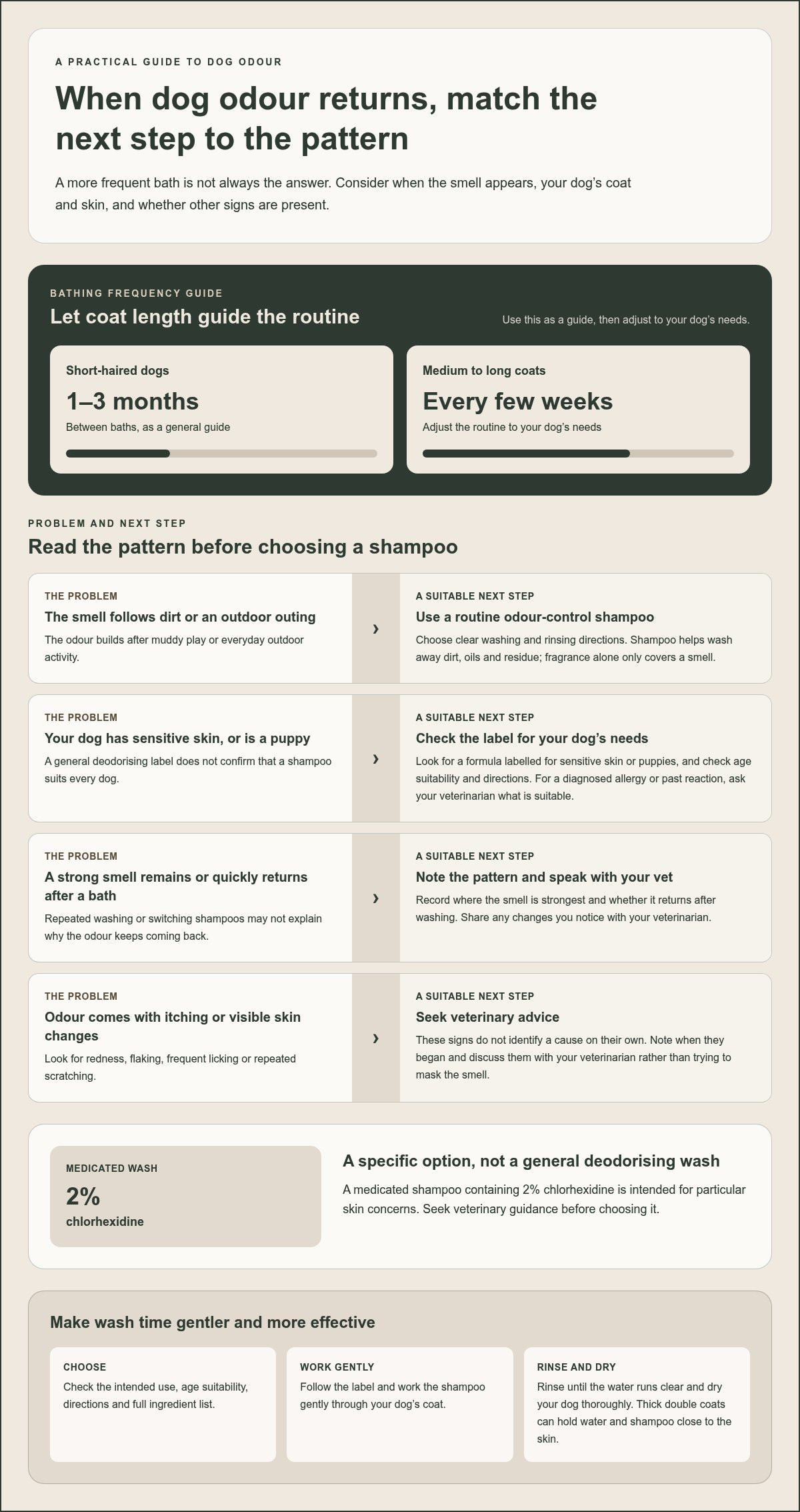
The best answer to a smelly dog isn’t always a more frequent bath. Short-haired dogs may need a bath every 1-3 months, while dogs with medium to long coats may need one every few weeks. Choosing the best shampoo for smelly dogs in Australia also means considering your dog’s coat and skin, rather than simply trying to cover the odour.
A lingering smell can be frustrating, especially just after you’ve bathed your dog. The right shampoo can make wash time a gentler part of their care routine, but a strong odour that persists after bathing may need veterinary attention.
Here, you’ll learn what to look for in an odour-control shampoo, how to use it safely and when recurring smells, itching or skin changes are a reason to speak with your vet. Choosing carefully and bathing gently can help keep your dog feeling fresh and comfortable.
Key Takeaways
- Choose a shampoo suited to your dog’s coat and skin, rather than relying on fragrance alone to mask a persistent smell.
- Use coat length as a guide to bathing frequency, then adjust the routine to your dog’s needs.
- Follow the shampoo label carefully, rinse thoroughly and supervise your dog if a medicated wash needs time on the coat.
- If odour keeps returning after baths, or comes with itching, redness or flaking, speak with your veterinarian.
- Compare shampoos by their intended use and suitability, and consider how each was assessed before deciding what may fit your dog’s routine.
Choosing shampoo by effectiveness and suitability
The best shampoo for smelly dogs in Australia depends on why the odour persists, your dog’s skin and coat, and the product’s intended use. First, consider whether the smell follows a muddy outing, builds between washes or returns soon after bathing. Each pattern suggests a different next step: routine cleaning, a formula suited to sensitive skin or veterinary advice.
Which Australian dog shampoos are best for sensitive skin, allergies or puppies? Choose a shampoo labelled for your dog’s needs, such as sensitive skin or puppies, and follow its directions. If your dog has a diagnosed allergy or reacts to grooming products, ask your veterinarian which type is suitable.
What ingredients make a dog shampoo effective for odour control? Effective odour control starts with washing away dirt, oils and residue, then rinsing thoroughly; fragrance alone can only cover a smell. A medicated wash containing 2% chlorhexidine is a different option, intended for particular skin concerns rather than ordinary odour, so seek veterinary guidance before choosing it.
Read the label before buying. Check the intended use, age suitability, directions and full ingredient list. Don’t assume that “natural”, “sensitive” or “deodorising” means suitable for every dog. If your dog has reacted to a product before, compare its ingredients with the new formula and discuss any concerns with your vet.
Coat type matters, too. A thick double coat can hold water and shampoo close to the skin, while a short coat is easier to rinse. Choose a product with directions suited to your dog’s coat, work it gently through the coat and rinse until the water runs clear. Residue can leave the coat feeling unpleasant and make the next wash less comfortable.
| Shampoo option | Best suited to | What to consider |
|---|---|---|
| Routine odour-control shampoo | Everyday dirt or outdoor smells | Look for clear washing and rinsing directions; don’t rely on fragrance alone. |
| Sensitive-skin or puppy-labelled shampoo | Dogs with these specific needs | Check age and skin suitability on the label; seek advice for known allergies. |
| Medicated shampoo containing 2% chlorhexidine | Specific skin concerns | Use only with veterinary guidance, as it isn’t a general deodorising wash. |
Choose a shampoo that suits the likely cause of the smell and your dog’s needs. Follow the label directions and your veterinarian’s advice where relevant.
When persistent odour may need veterinary attention
A strong smell that remains after a bath, returns quickly or seems to come from one area deserves attention. Persistent odour can occur alongside skin changes, so look beyond the coat before choosing another shampoo. Check for redness, flaking, itching, frequent licking or scratching, and note when each sign began.
Speak with your veterinarian if your dog has an acute or chronic skin condition, or develops redness, flaking or ongoing itch. A smell that returns after bathing, constant licking or repeated scratching are also reasons to seek veterinary advice. These signs don’t identify a cause on their own, but they can help your vet understand what’s happening.
Before the appointment, note where the smell seems strongest, whether it returns after washing and any changes you’ve noticed. For example, record whether your dog scratches after a bath or an unusual smell seems to come from the ears or mouth. This can help you describe the pattern clearly.
- Skin and coat: Look for redness, flaky areas, greasy patches or changes in coat condition.
- Ears: Notice unusual odour, repeated head shaking or persistent attention to one ear.
- Mouth: Pay attention to ongoing bad breath or changes in eating or chewing.
- Behaviour: Record frequent licking, scratching or restlessness during grooming.
How can you prevent dog odour between baths, including ear, dental, coat and bedding care? Brush your dog regularly to lift loose hair and debris, keep bedding clean, and include gentle ear checks and tooth brushing in the care routine. If an area smells unusual or looks irritated, don’t mask it with fragrance. Ask your veterinarian for guidance.
Keep grooming simple while you watch for changes. Use a clean brush suited to your dog’s coat, wash bedding when it becomes soiled, and dry your dog thoroughly after a bath. Avoid scrubbing a sore-looking patch or applying a new product to irritated skin, as this can make it harder to track what has changed.
Keep a short note of bathing dates and any signs that follow. If odour repeatedly returns after washing, share that pattern with your vet rather than bathing more often or switching products repeatedly. A veterinarian can assess persistent smell alongside your dog’s skin, ears, mouth and behaviour, then advise on an appropriate next step.
Prompt attention is especially useful when a strong smell appears with itching, redness or flaking. Shampoo can clean the coat, but repeated washing won’t explain why an odour keeps returning. Noting the location, timing and accompanying signs gives your veterinarian practical information to help decide what care is suitable.
Dog shampoo safety and usage FAQs
Medicated or antifungal shampoo may suit a dog with a specific skin condition, but persistent odour alone isn’t a reason to choose one. Ask your veterinarian whether a medicated wash is appropriate for your dog’s signs.
For canine Malassezia dermatitis, a medicated wash is typically used about twice weekly. The condition and product directions matter, so follow the schedule your veterinarian recommends rather than increasing use to tackle the smell.
How should you use a medicated shampoo? Read its label, wet your dog’s coat and apply the wash as directed. If the instructions specify contact time, supervise your dog while the shampoo stays on the coat to prevent them ingesting or inhaling it.
Rinsing is essential. Work water through the coat until shampoo residue is gone, especially with dense or double coats. Part the coat with your fingers so water reaches the skin, rather than rinsing only the outer layer.
- Use the correct product: Choose a shampoo labelled for dogs and follow its directions.
- Follow the stated amount: Don’t assume that more product will clean better.
- Supervise contact time: Prevent your dog from licking or inhaling a medicated wash left on the coat.
- Rinse thoroughly: Check thick areas, such as the chest, legs and tail.
Can you bathe a dog with a skin condition twice a week? Some dogs with skin conditions may need bathing twice a week, but the frequency should match your veterinarian’s advice and the shampoo directions. A routine designed for one dog may not suit another.
What if your dog licks the shampoo? Stop the wash and prevent further licking or inhaling, particularly if a medicated product is on the coat. Follow the product label’s safety directions and contact your veterinarian if you’re concerned about your dog’s exposure or behaviour.
Should you combine shampoos? Avoid layering a routine cleanser, medicated wash and fragrance in the same bath unless your veterinarian has advised that routine. Using one product at a time makes it easier to follow directions and notice changes in your dog’s skin.
Keep the bottle nearby during bath time so you can refer to its instructions from start to finish. If its directions differ from general bathing advice, follow the label and your veterinarian’s guidance for that product and your dog.
How the shampoos were tested
The comparison used each shampoo on two dogs with different coat types: a long-haired, double-coated dog and a short-haired, single-coated dog. This offers a practical view of how products perform on contrasting coats. It doesn’t represent every breed, coat condition or bathing routine, so treat the results as one consideration, not a guarantee for your dog.
Odour removal was also assessed using coffee-scented rags. Each rag was soaked for 5 minutes, then washed with shampoo and water for one minute. The tester used half a teaspoon of shampoo per rag. After washing, each rag dried overnight before it was smelled. These steps gave the odour test a consistent process across the shampoos.
The rag test and the dog test answer different questions. Washing a coffee-soaked rag offers a simple comparison of how well a shampoo removes that particular smell from fabric. It can’t reproduce dog skin, natural oils, coat density or the way a dog moves during a bath. The two dogs provide useful coat context, but don’t represent every individual response.
- Coat variation: The long-haired, double-coated dog and short-haired, single-coated dog provided contrasting coat examples.
- Odour comparison: Coffee-soaked rags gave the tester a repeatable smell to assess after washing.
- Consistent method: The 5-minute soak, one-minute wash and half-teaspoon measure kept the rag procedure consistent.
- Drying stage: Overnight drying meant the rags were assessed after washing and drying, not while wet.
These details clarify what the comparison can tell you when choosing a shampoo. A product that removes coffee odour from a rag has passed that specific test, not necessarily every odour challenge a dog encounters. Results from two dogs can help frame suitability, but your dog’s skin, coat and response matter too.
Consider the test method alongside the shampoo’s intended use and label directions. A shampoo for routine cleaning, for example, should be judged differently from a medicated wash for a specific skin concern. The rag test doesn’t establish suitability for sensitive skin or a medical condition, and it shouldn’t replace veterinary advice if symptoms persist.
Overall, the testing offers a comparison using two dogs and a repeatable odour procedure. Its clearest value is showing how the products were assessed, including the coffee-rag process and overnight drying. Consider those observations alongside your dog’s coat needs, the product instructions and any advice from your veterinarian.
Shampoo recommendations for smelly dogs
The right choice depends on the source of the smell, your dog’s coat and the product’s intended use. For everyday dirt after a beach walk, choose a dog shampoo labelled for routine cleaning. If odour lingers after bathing or comes with skin changes, stronger fragrance isn’t the answer. Speak with your veterinarian before choosing a medicated wash.
How do Australian dog shampoos compare by price, size and cost per wash? Compare the pack price with its volume and the label’s recommended amount per bath. A larger bottle may offer more washes, but coat length, dilution directions and the amount needed each time affect the cost per use.
Where can you buy dog deodorising shampoos in Australia, and what do reviews say? You can find them through Australian pet-care retailers, veterinary clinics and brand websites. Look for specific details in reviews, such as coat type, ease of rinsing and how long the scent lasted, rather than relying on a star rating alone.
A routine odour-control shampoo is a sensible starting point when the smell follows dirt or outdoor activity. Check that it’s intended for dogs and read the directions before bathing. A clean scent can be pleasant, but fragrance won’t explain a smell that quickly returns or mask a persistent skin concern.
Medicated options serve a different purpose. The described medicated dog shampoo wash contains 2% chlorhexidine. It’s not a general deodorising choice; ask your veterinarian whether a medicated product suits your dog, and follow the directions they recommend.
Use this decision guide to narrow your options:
- Outdoor dirt or coat residue: Choose a routine dog shampoo and rinse the coat thoroughly.
- Sensitive skin or puppy needs: Select a product labelled for that use, and check its instructions.
- Persistent odour or skin changes: Seek veterinary advice before trying a medicated shampoo.
- Choosing between pack sizes: Compare label directions and the amount used per bath, not volume alone.
When reading reviews, look for useful context. A review about a short coat may not reflect how the same formula feels on a dense double coat. Give more weight to comments describing the dog’s coat, how the shampoo was applied, how easily it rinsed and the result after drying.
For a considered routine, start with the product’s intended use, then match its directions to your dog’s coat and needs. Explore a thoughtful dog-washing routine as you compare suitable options.
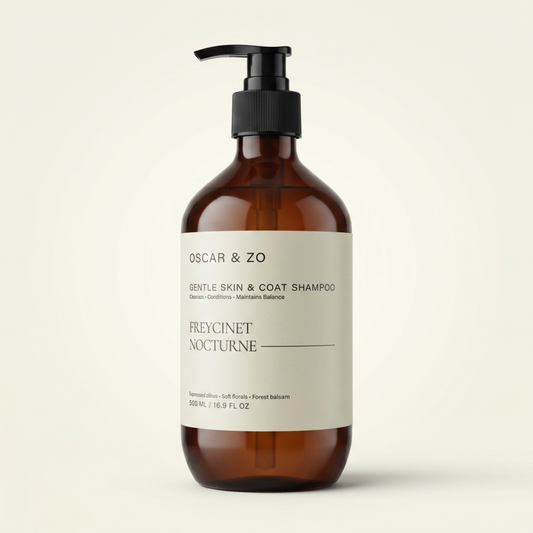
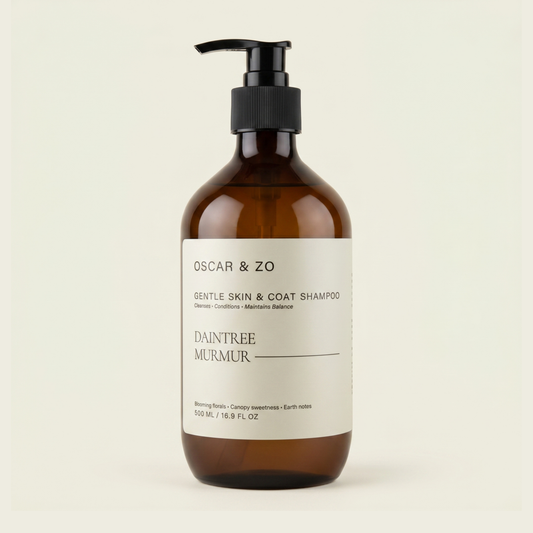
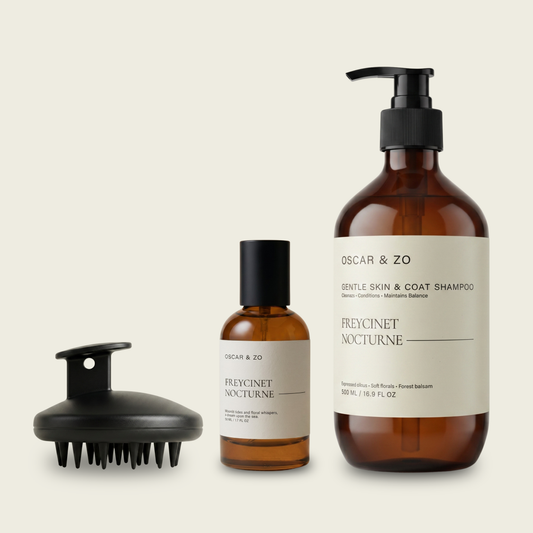
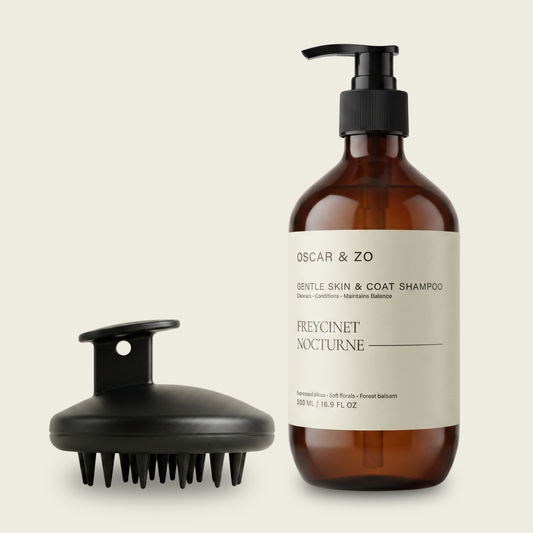
Oscar & Zo: Skin & Coat Shampoo
Oscar & Zo Skin & Coat Shampoo is a considered option for everyday washing when you’re choosing a routine dog shampoo. Use it as part of a calm grooming ritual, following the product directions and rinsing your dog’s coat thoroughly. A fresh wash can support coat care, but shampoo isn’t a substitute for veterinary advice when odour persists or appears alongside skin changes.
For a simple routine, gather your shampoo, towel and grooming tools before bath time, then keep the wash gentle and unhurried. If the smell continues after bathing, or your dog is itching, licking or showing redness, speak with your veterinarian before changing products.
Explore Oscar & Zo’s Skin & Coat Shampoo at oscarandzo.com.au if it suits your dog’s everyday grooming routine.
Make grooming a gentle routine
Choosing the best shampoo for smelly dogs in Australia is about making bath time more comfortable, not simply more fragrant. Notice what helps your dog settle, from a familiar towel to a quieter bathing space, and let those small details shape a routine that feels manageable for both of you.
If you’d like help finding a thoughtful approach to your dog’s grooming routine, contact Oscar & Zo. A calm, consistent ritual can make everyday care feel easier.
Frequently asked questions
How often should I wash my dog?
Let your dog’s coat condition guide the routine rather than bathing automatically after every outing. A collar or harness can hold moisture and odour, so remove it after walks and let it dry before using it again. Brushing between baths can lift loose hair and surface debris without another full wash. If your dog’s coat feels coated or looks dirty, plan a bath using a dog shampoo’s directions.
Why does my dog stink?
Odour can cling to things that touch your dog, including a damp collar, harness or coat. After a wet-weather walk, remove those items and let them dry fully before storing them. Check whether the smell remains on your dog once their coat and gear are dry. If it seems to come from your dog rather than an item, note when you first noticed it and where it seems strongest.
Why is choosing the dog shampoo important?
A dog shampoo should suit the job you need it to do. A routine wash after outdoor play differs from a product intended for a particular skin concern. Read the label for directions, age suitability and warnings, then use the product as instructed. Keep shampoo away from your dog’s eyes, nose and ear canals, and gather towels and supplies beforehand to make bath time easier.
What causes dogs to smell bad, and when should owners see a vet?
A smell may come from a wet collar, harness or other item rather than your dog’s coat. Remove the gear, let it dry and check whether the odour remains. If it does, note when it started and whether it changes after walks or grooming. Share those observations with your veterinarian, who can assess your dog and advise on suitable care.
Which dog shampoos for smelly dogs are best rated in Australia?
Ratings alone can’t show whether a shampoo will suit your dog. Read reviews describing the product’s directions, how easily it rinsed from the coat and whether the reviewer’s dog had a similar coat type. Treat a review as one person’s experience, not a promise of the same result. Compare those details with the label, intended use and your dog’s grooming needs before deciding.
How often should you bathe a smelly dog, and how should you use shampoo?
Follow the washing routine suited to your dog and the bottle directions. Before starting, place a non-slip mat in the bathing area and have a towel ready to help your dog stay settled. Wet the coat evenly, apply shampoo according to its label and rinse carefully. Afterwards, dry the coat and clean the bathing area so leftover product or water doesn’t linger.
Are human shampoos or household deodorising products safe to use on dogs?
Choose a product labelled for dogs, and don’t use household deodorising sprays as grooming products. Keep surface sprays away from your dog’s coat, face and bathing area. If a product gets onto your dog accidentally, follow its label’s first-aid instructions and contact your veterinarian if you’re concerned. Store grooming and household products separately so the right bottle is easy to reach at bath time.