


How to Bathe, Rinse and Dry Your Puppy Safely

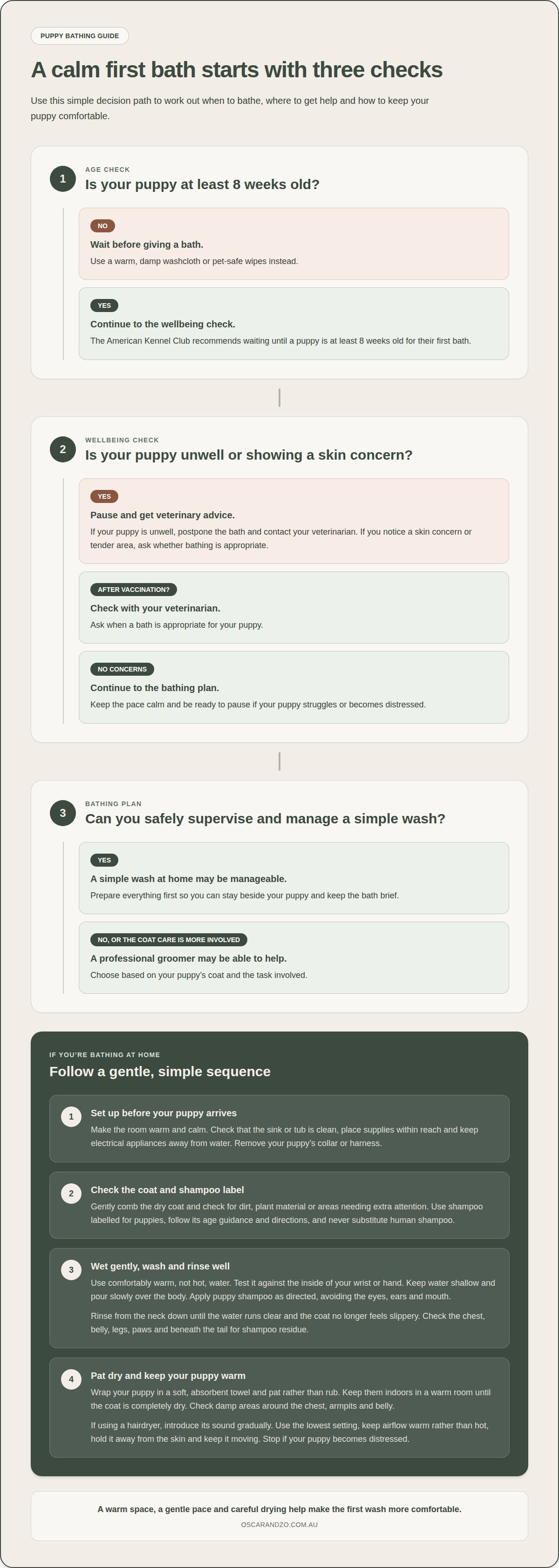
Your puppy doesn’t need to wait until six months for a first bath. The American Kennel Club recommends waiting until your puppy is at least eight weeks old; before then, use a warm, damp washcloth or pet-safe wipes. If you’re wondering what to use for your puppy’s first bath, choose shampoo made for puppies and never use human shampoo.
It’s natural to want bath time to feel gentle and safe, especially while your puppy is still getting used to water. A warm room, a calm pace and careful drying can make the experience more comfortable. Keeping your puppy warm is particularly important when they’re young.
Learn how to prepare the bathing area, introduce water gradually, rinse thoroughly and dry your puppy without rushing. These simple steps can make the first wash feel less like a chore and more like a calm moment of care.
Key Takeaways
- Set up a warm, calm bathing space and gently comb your puppy’s dry coat first to loosen tangles.
- Keep water shallow and pour it slowly over the body, taking care around the face, eyes and ears.
- Rinse thoroughly, then pat your puppy dry and keep them warm until their coat is completely dry.
- Introduce bath sounds and water gradually, using praise and short, positive sessions to build comfort.
- Adjust bathing frequency to your puppy’s coat and needs, since washing too often can strip natural oils.
Preparing bathing supplies and the bathing area
Gather everything you need before bringing your puppy to the bath. Having a clear sequence makes it easier to stay beside them and keep the wash manageable.
-
Choose and prepare puppy shampoo
For what to use for your puppy’s first bath, choose a shampoo labelled for puppies. Read the directions before opening the bottle, including age guidance and whether dilution is required. Measure or prepare the product as directed rather than estimating. Keep the label visible during bathing so you can refer back to the instructions if needed.
-
Comb and prepare the coat
Before bathing, remove your puppy’s collar or harness so it doesn’t obstruct access to the neck. Check the coat for dirt, plant material or areas that may need extra attention, such as muddy legs. Note any irritation or tender areas. If you see a skin concern, ask your veterinarian whether bathing is appropriate.
-
Prepare the bathing area
Place the shampoo and bathing tools within reach before your puppy arrives. Check that the sink or tub is clean, and set the plug and tap. Keep electrical appliances away from water. Arrange supplies in the order you’ll use them, so you can focus on holding and reassuring your puppy throughout the wash.
- Choose between bathing at home and using a professional groomer based on your puppy’s coat and the task. A simple wash can be manageable at home if you can safely supervise and handle your puppy. A groomer may help with more involved coat care. Oscar & Zo offers grooming essentials for home care.
- For your puppy’s first bath, wet the body gently, apply puppy shampoo according to its label, then rinse the coat thoroughly. Avoid the eyes, ears and mouth. Keep one hand close to your puppy, and pause if they struggle or become distressed. Prepare everything beforehand to keep the bath brief.
- Use comfortably warm water, not hot water. Test it against the inside of your wrist or hand before wetting your puppy, and adjust it if it feels too warm. Keep the temperature steady during the wash. Along with suitable shampoo, comfortable water is an important part of a gentle first bath.
- If your puppy is unwell, postpone bathing and contact your veterinarian for advice. After vaccination, ask your veterinarian when a bath is appropriate. Every puppy’s needs are different, so don’t rush to wash one who isn’t feeling well. Keep the supplies ready for another day.
Rinsing and drying a puppy safely
Rinse away every trace of shampoo, then dry your puppy indoors with a soft towel. A gentle, steady approach helps keep them warm and makes the final part of bathing easier to manage.
-
Rinse the puppy
Use a cup of comfortably warm water to rinse your puppy’s coat, working from the neck down. Keep water away from the eyes and ears, and don’t direct it at the face. Move your fingers through the coat as you pour, so water reaches the skin beneath. Continue until the water runs clear and the coat no longer feels slippery.
- Pay close attention to areas where shampoo can collect, such as the chest, belly, legs and beneath the tail. Gently lift each paw to rinse between the toes. Shampoo residue can leave your puppy’s skin itchy or dry, so rinse thoroughly. If the coat still feels slick, rinse that area again.
-
Dry with a towel or hairdryer
Lift your puppy from the bath and wrap them in a soft, absorbent towel. Pat the coat rather than rubbing, which can tug at damp hair and unsettle your puppy. Give your puppy a moment to stand on a dry towel after the first one becomes wet. A towel on the bathroom floor can also catch drips and invite a gentle rub.
- If you use a hairdryer, introduce its sound gradually. Switch it on across the room, then move closer only while your puppy remains settled. Choose the lowest setting, keep the airflow warm rather than hot, and hold the dryer away from the skin. Keep it moving over the coat, and stop if your puppy becomes distressed.
-
Dry the puppy safely
Keep your puppy indoors in a warm room until their coat is completely dry. Small and thin-coated puppies can get cold easily, so don’t leave them outside to dry, even on a warm day. Place a clean towel beneath them while they rest, replacing it if it becomes damp. Stay nearby and check their belly and legs for wet patches.
- Check the coat by gently parting the fur with your fingers, especially around the chest, armpits and belly. These areas can stay damp after the outer coat feels dry. For a thick coat, separate the hair into small sections and dry each carefully with a towel or a low-setting hairdryer. Avoid rushing or holding warm airflow in one place.
- Let your puppy settle before returning to play or a draughty area. Offer calm praise while drying them, then give them a quiet place to rest on a dry surface. If they shake, pause and let them regain their balance before continuing. A calm finish can make the next bath feel more familiar.
What shampoo is safe for puppies?
Choose shampoo labelled for puppies and follow its directions closely. For a puppy’s first bath, keep it simple: use puppy-specific shampoo, apply it gently and rinse thoroughly.
-
Choose a mild puppy-specific shampoo
Choose shampoo made for puppies, rather than selecting by scent or appearance alone. Read the label for age guidance and directions, including whether the product needs diluting. Puppy skin can be sensitive, so use only the directed amount and keep shampoo away from the eyes, nose and ear canals. For a first bath, start with shampoo clearly labelled for puppies.
-
Avoid human shampoo
Keep human shampoo out of your puppy’s bath. It can be too harsh for puppies, whose skin needs gentle care. This includes everyday shampoo, even if it’s described as mild for people. Don’t substitute conditioner or another household cleanser. If you’ve already used a human product and notice a reaction, rinse the coat thoroughly and contact your veterinarian.
-
Select puppy-safe supplies
Gather puppy shampoo, a cup for rinsing, soft towels and a non-slip mat before bathing. Use a clean cup instead of a spray attachment if its sound or pressure unsettles your puppy. Keep supplies within reach so you don’t need to leave your puppy unattended. Avoid extra products unless their directions say they’re suitable for puppies.
- Read the shampoo directions before wetting your puppy. Some puppy shampoos need diluting, so prepare the mixture as directed rather than guessing. If your veterinarian has recommended a medicated shampoo, follow the specific instructions for use. Some medicated shampoos need to stay on the coat for a few minutes. Keep track of the time and rinse as directed.
- Use shampoo sparingly and work it gently through the coat. Focus on areas that need washing, such as muddy paws or a soiled belly, while avoiding the face. Don’t scrub roughly or add more product just to create extra lather. Thorough rinsing matters because shampoo residue can leave a puppy’s coat itchy or dry.
- Keep baths occasional, guided by your puppy’s coat and needs. Washing too often can strip natural oils. A lightly dusty puppy may need a simple wipe-down rather than a full shampoo wash. If your puppy has ongoing skin irritation or a coat concern, speak with your veterinarian before changing products or bathing routines.
- Make the experience positive by speaking softly and offering praise at each step. Keep the shampoo bottle closed and out of reach between uses, then rinse your puppy thoroughly with clean water. A calm routine, puppy-specific shampoo and careful attention to the label can make washing easier to repeat.
Helping puppies become comfortable around water
Wait until your puppy is at least eight weeks old for a first bath. Before then, use a warm, damp washcloth or pet-safe wipes for small messes.
- Start with gentle handling before introducing water. Let your puppy explore the dry bath area, then practise brief touches around their paws, legs and body. Keep each introduction calm and offer praise or a treat when they remain settled. This helps make the mat, cup and your hands feel familiar before bathing begins.
-
Get the puppy comfortable with handling
Choose a non-slip mat and let your puppy stand on it while the bath is dry. Touch one paw at a time, then briefly lift each leg as you would when rinsing. Pause if your puppy pulls away, and try again later with a gentler touch. Avoid holding them firmly in place, which can make the bath more unsettling.
- Introduce water gradually with a cup and a little warm water. Let your puppy hear the water first, then wet their paws before moving to their legs and body. Avoid spraying them with a shower attachment, which can feel sudden or noisy. Keep the session short, supervise closely and praise calm behaviour.
- For puppies younger than eight weeks, skip the full bath. Newborn puppies can’t regulate their body temperature effectively, and young puppies can become chilled during bathing. Clean a dirty paw or patch of fur with a warm, damp washcloth or pet-safe wipes instead. Dry the area promptly with a soft towel.
-
Keep small or thin-coated puppies warm
Prepare a warm, draught-free room before bathing a small or thin-coated puppy. Keep the bath brief, then pat them dry with a soft towel and keep them indoors until completely dry. These puppies can get cold easily, so don’t leave them outside to dry, even on a warm day. Check their belly and legs for damp fur.
- To keep your puppy warm and dry after a bath, gently pat the coat with a soft towel, then keep them in a warm room until fully dry. Small and thin-coated puppies need particular care because they can get cold easily. Don’t leave any puppy outside to dry.
- Make the first water experience predictable by clearing the bath area and staying beside your puppy. Use warm water, a shallow bath and a calm voice, then stop if your puppy becomes distressed. Brief, positive introductions can help puppies become familiar with bathing without forcing them to stay in the water.
Minimum age for a puppy’s first bath
Use age, health and warmth as your guide before planning a full bath.
- Wait until your puppy is at least eight weeks old for a first bath. The American Kennel Club recommends waiting until this age before giving a puppy a full bath. This is a practical minimum, not a reason to bathe immediately. Choose a time when your puppy is well and you can keep the session calm and brief.
- Use a warm, damp washcloth or pet-safe wipes for puppies younger than eight weeks. Clean only the soiled area, such as a dirty paw or patch of coat, rather than soaking the whole puppy. Dry the area promptly with a soft towel. Newborn puppies cannot regulate their body temperature, so avoid full bathing.
- Don’t delay a first bath until six months simply because your puppy is young. Puppies generally don’t need to wait until six months for their first bath. Once your puppy is at least eight weeks old, consider their comfort, health and coat condition before deciding whether a wash is needed.
- Choose a quiet moment when your puppy is settled, not straight after lively play or a stressful outing. Keep the room warm, prepare towels beforehand and keep the bath brief. A puppy who is tired, distressed or unwell may find handling and water harder to manage.
- Check your puppy’s condition before bathing. If they’re unwell, recovering from illness or showing skin irritation, postpone the bath and speak with your veterinarian. This avoids unnecessary handling or washing when your puppy needs care suited to their health.
- Introduce the bath space before using water. Let your puppy explore the dry tub or sink, then stand briefly on a non-slip mat. Praise calm behaviour. For a first wash, use a cup to pour water slowly over the body, avoiding a sudden spray or prolonged lathering.
- Plan for warmth after bathing, particularly for small or thin-coated puppies. Pat the coat with a soft towel and keep your puppy indoors in a warm room until completely dry. Young puppies can become chilled during bathing, so don’t leave them outside to dry, even on a warm day.
- Let your puppy’s response guide the pace. If they become distressed, stop, dry them and try a gentler introduction another time. For a calm first-bath routine, explore puppy bathing essentials and prepare what you need before beginning.
Oscar & Zo
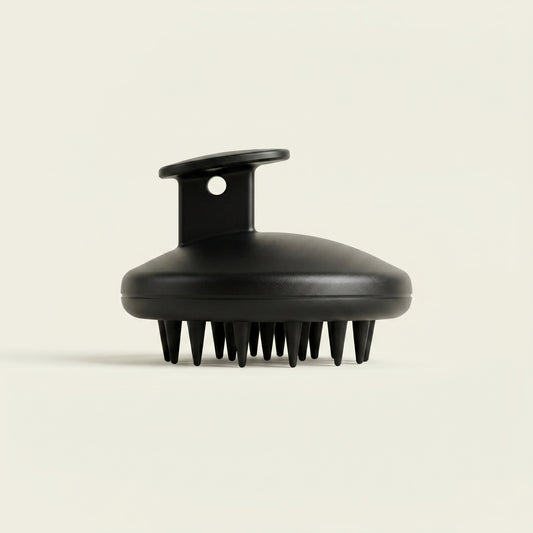
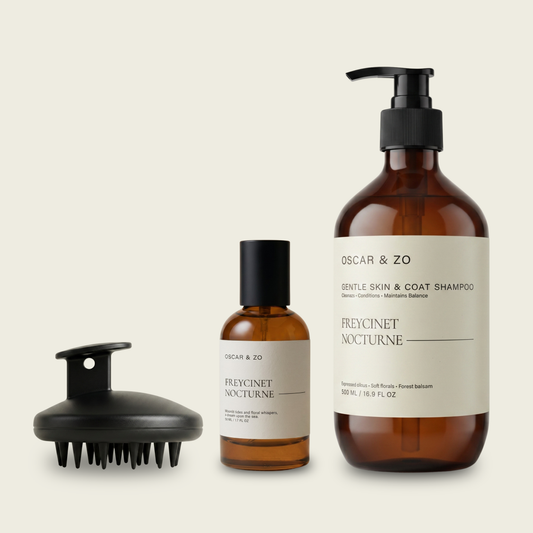
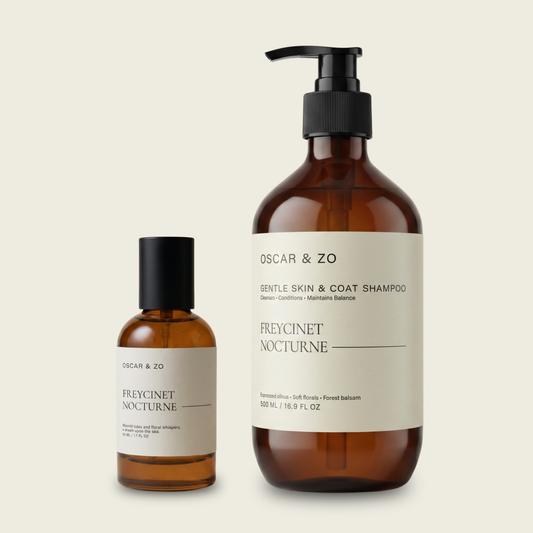
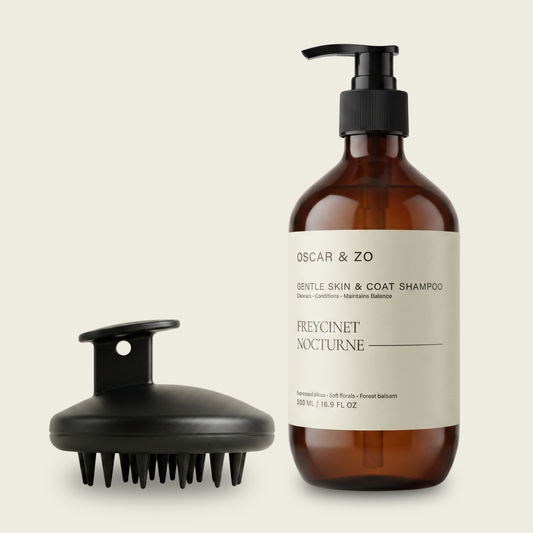
Oscar & Zo offers grooming essentials to make everyday coat care more considered, from shampoo to practical Grooming Tools. For a puppy’s first wash, choose shampoo labelled for puppies and follow its directions. Use grooming tools gently to prepare and care for the coat between baths.
As your puppy grows, these essentials can become part of a calm home grooming routine, alongside patient handling and thorough drying. If you’d like guidance on choosing grooming essentials for your routine, contact Oscar & Zo. We’re here to help you approach your puppy’s care with thoughtfulness and confidence.
Make bath time a familiar ritual
Your puppy’s early experiences can shape how bathing feels later. Let each wash become a quiet, familiar part of caring for them, rather than something to rush. As your puppy grows, notice which parts of the routine feel comfortable and where they need more time. That awareness can guide thoughtful choices about what to use for your puppy’s first bath and future coat care.
There’s no need to make every bath perfect. A steady pace, gentle handling and attention to your puppy’s comfort are meaningful foundations. If you’d like help choosing grooming essentials that suit your routine, contact Oscar & Zo for advice.
With patience and care, small moments of grooming can grow into a reassuring ritual you share.
Frequently asked questions
How often should I bathe my puppy?
Most puppies don’t need frequent baths; the right interval depends on coat type, activity and how dirty they get. A muddy walk may call for spot-cleaning paws rather than washing the whole coat. Too-frequent bathing can strip natural oils. If your puppy needs washing often because of persistent mess or a skin concern, ask your veterinarian whether the routine or product should change.
What if my puppy’s afraid of water?
Pause the bath and help your puppy build confidence in small steps. Start with a dry bathroom and a non-slip surface, then reward relaxed exploration with praise or a treat. Later, introduce a little water to the paws before trying a full wash. Don’t restrain a frightened puppy or force them to stay in the tub. If fear continues, discuss gradual handling with your veterinarian.
When can a puppy have its first bath?
A puppy can have a full bath from at least eight weeks old. Before then, clean a small dirty patch with a warm, damp cloth or pet-safe wipes, then dry it promptly. Age alone doesn’t mean a bath is needed straight away. Consider whether your puppy is well, settled and genuinely dirty, and keep any first wash brief and supervised.
What shampoo is safe for a puppy’s first bath in Australia?
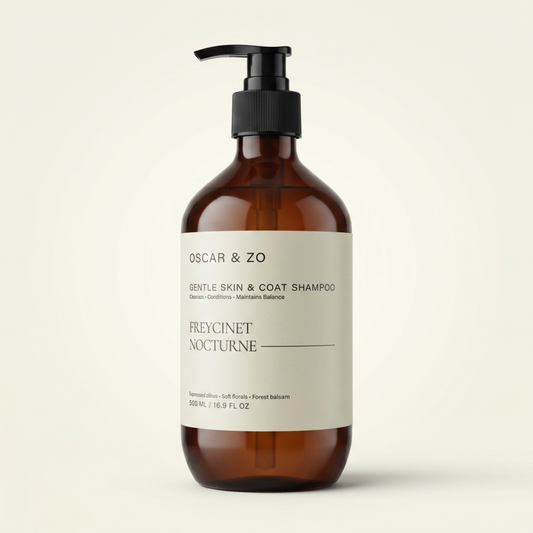
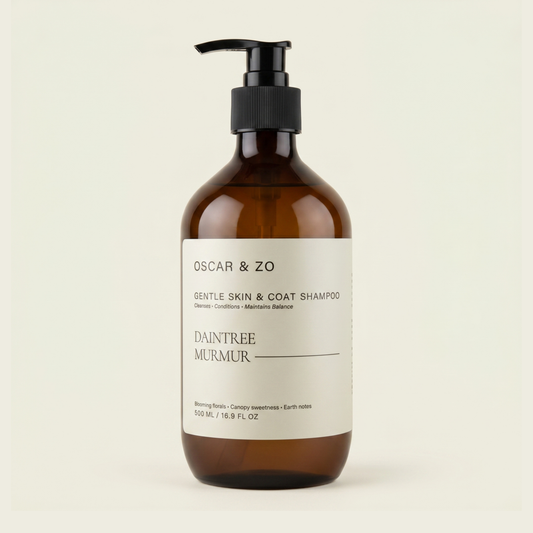
Choose shampoo labelled for puppies and follow its directions, including age guidance and dilution instructions. Oscar & Zo’s Skin & Coat Shampoo is suitable for puppies when used as directed. Keep shampoo away from your puppy’s eyes, ears and mouth, and rinse the coat thoroughly. If your puppy has a diagnosed skin condition or allergy, speak with your veterinarian before use.
Can you use human shampoo, baby shampoo, or dish soap on a puppy?
No. Use shampoo made for puppies instead of human shampoo, baby shampoo or dish soap. Human shampoo can be too harsh for a puppy, and household washing products aren’t a substitute for puppy-specific shampoo. If you’ve already used one, rinse the coat well with clean water. If irritation appears or your puppy seems unwell, contact your veterinarian for advice.
How often should puppies be bathed?
For puppies at least three months old who have completed their vaccinations, a bath every two weeks or less often is usually enough. Coat type and everyday activity also matter: thick or curly coats may need different care from short coats. Weekly bathing is often more frequent than necessary unless a veterinarian recommends it. Between baths, wipe away small patches of dirt instead.
What are the risks of bathing a very young puppy?
Very young puppies can become chilled because they can’t regulate their body temperature effectively. A full bath may leave them wet and cold, particularly if the room is draughty or drying takes too long. For puppies younger than eight weeks, clean only the soiled area with a warm, damp cloth or pet-safe wipes. Dry it promptly and keep the puppy warm indoors.